



Excavator
Your Professional Excavator Supplier!
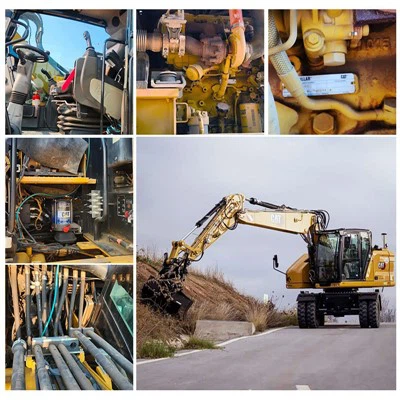
Shandong Zhongjue Heavy Industry Co., Ltd., established in 2015, originated from the predecessor Hengyuan Group. The company first founded Jining Luzhong Machinery Equipment Co., Ltd. in 2015, followed by the establishment of Shandong Zhongjue Heavy Industry Co., Ltd. in 2019 and Shanyi Heavy Industry Co., Ltd. in 2022. Dedicated to the fields of agricultural machinery and small to medium-sized construction machinery, the company operates with advanced production facilities and modern manufacturing processes. Our product portfolio includes fully hydraulic wheel excavators, small and medium-sized tracked excavators, CNC steel processing equipment, dredging and demolition robots, as well as customized modification solutions for special excavator applications.


Why Choose Us
Certifications & Qualifications
We have obtained ISO 9001 Quality Management System Certification and ISO 14001 Environmental Management System Certification, as well as EU CE certification, demonstrating our ability to manage quality and the environment in accordance with international standards.
Advanced Equipment
We are equipped with a complete modern production equipment system covering key manufacturing processes such as precision cutting, forming, welding, machining, assembly, testing, and painting, ensuring comprehensive product manufacturing precision and process stability.
Sales Market
Our domestic business continues to grow steadily, and our overseas markets have successfully expanded to Europe, the Americas, Southeast Asia, Africa, and other parts of Asia; initially establishing a broad global sales and service network.
High-Quality Service
We provide customized solutions and assist customers in extending equipment lifespan through a rapid response mechanism. Services include regular maintenance, comprehensive spare parts supply, technical training, value-added services, warranty service,and an efficient complaint handling mechanism.
Specification
|
Model |
ZJ10 |
|
Operating Weight (T) |
1 |
|
Mechanical/Pilot |
Mechanical |
|
Brand |
Changchai / Science popularization / Briggs & Stratton / Youpu |
|
Model |
192F |
|
Power(KW) |
8.2/7.6/7/10 |
|
Emission standard |
China Stage II |
|
Hydraulic Pump Brand |
Ulixsin |
|
Control Valve Brand |
North |
|
Swing Motor Brand |
OLD |
|
Travel Motor Brand |
OLD |
|
Bucket Capacity (m³) |
0.022 |
|
Length × Width × Height(㎜) |
2790*850*1985 |
|
Max. Digging Depth (㎜) |
1670 |
|
Max. Digging Height (㎜) |
2875 |
|
Max. Dumping Height (㎜) |
1835 |
|
Max. Digging Radius (㎜) |
2700 |
|
Min. Swing Radius (㎜) |
732 |

Advantages of Excavator
Versatility
Excavators are incredibly versatile machines that can handle a wide range of tasks, from digging to demolition. They are equipped with a range of attachments that make it easy to switch between tasks, making them ideal for use in multiple industries.
Efficiency
Excavators are known for their efficiency, and they can handle large amounts of material in a short amount of time. They also have high-powered hydraulic systems that allow them to work quickly and efficiently, reducing the amount of time and labour required for a project.
Power and strength
Excavators are equipped with powerful engines and hydraulic systems, making them strong and capable of handling tough and heavy-duty tasks. They can dig deep into the ground, break down large structures, and move massive amounts of materials.
Precision and control
Excavators are equipped with precision controls and instruments that allow the operator to perform tasks with accuracy and control. They are equipped with joysticks and control panels that make it easy for the operator to manoeuvre the machine and control the attachments.
Improved safety
Excavators are designed to improve safety in the workplace. They are equipped with safety features, such as stability control and emergency shut-off buttons, that help prevent accidents and injuries. Additionally, they reduce the amount of manual labour required, making work processes safer and more efficient.
Excavator Types
Crawler Excavator
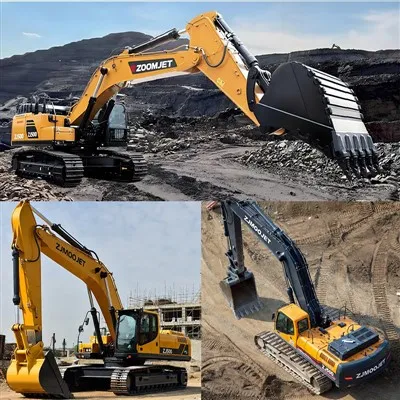
Unlike other large excavators that run on wheels, crawlers run on two large endless tracks and are optimal for mining and heavy-duty construction jobs. Also known as compact excavators, these excavators use hydraulic power mechanisms to lift heavy debris and soil.
Wheel Excavator
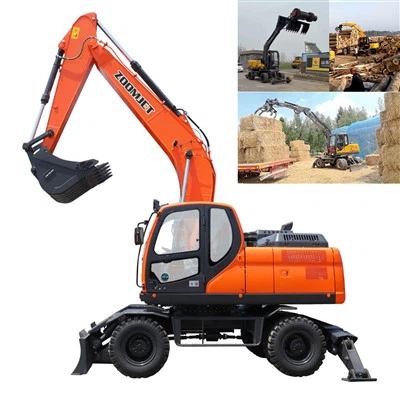
Wheeled excavators are similar in size and appearance to crawlers but run on wheels instead of tracks. Replacing tracks with wheels makes them faster and easier to maneuver on concrete, asphalt and other flat surfaces while still offering the same power capabilities.
Dragline Excavators
The dragline excavator is a larger excavator that operates with a different process. The equipment utilizes a hoist rope system that attaches to a bucket via a hoist coupler. The other side of the bucket is affixed to a dragline that runs from the bucket to the cab. The hoist rope raises and lowers the bucket while the dragline pulls the bucket toward the driver.
Suction Excavators
Also known as vacuum excavators, suction excavators feature a suction pipe capable of providing up to 400 horsepower. The excavator first releases a water jet to loosen the ground. The pipe, which contains sharp teeth at the edge, then creates a vacuum that carries away soil and debris up to 200 miles per hour.
Skid Steer Excavators
Unlike standard excavators, skid steers have booms and buckets that face away from the driver. This orientation allows the attachments to reach over the cab instead of around it, making these excavators useful in more narrow areas and maneuvering tricky turns.
Long Reach Excavators
A long reach excavator features a lengthier arm and boom sections. The design allows for better operation in hard-to-reach locations. The excavator's extendable arm can reach over 100 feet horizontally. These excavators are best used for demolition projects like structural crumbling and breaking down walls over bodies of water..
Mini Excavators
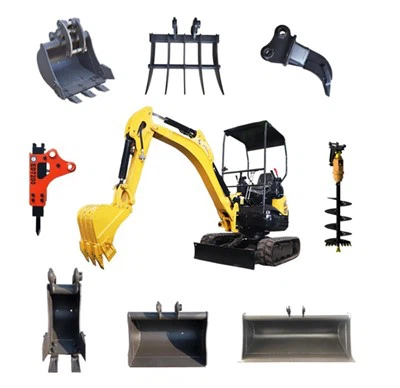
A smaller and lighter version of the standard excavator capable of minimizing ground damage and fitting through crowded, narrow sites like parking lots and indoor spaces. Also known as compact excavators, mini excavators typically incorporate reduced tail-swing or zero tail-swing to maneuver tighter turns and avoid contact with any obstacles.
Bucket
Buckets are the most common attachments seen on excavators. These steel attachments have teeth-like edges that can provide digging and scooping capabilities. Buckets come in different varieties, the most common being ditching buckets designed for grading stones and trenching buckets used to dig trenches.
Auger
Attaching an auger allows you to bore into the ground. Powered by hydraulic circuits, these helical attachments can reach over objects and drill deep holes. Augers come in different specifications and sizes for various digging conditions and terrains — they range from 4 inches to 50 inches in length and can dig up to 32 feet.
Breaker
Breakers are similar to jackhammers but are much larger in size. With the ability to provide up to 1,000 pounds of impact energy, these attachments can break into tougher surfaces like stone and concrete.
Clamp
Clamps allow excavator operators to pick up large materials that are too oversized for a bucket, such as tree stumps and concrete. The attachments can be used with buckets or as pieces in a grapple. Clamps are easy to attach and detach from excavators.
Coupler
Couplers allow you to quickly switch between tools and attachments without a crew. Their versatility is handy when moving between different tasks and processes on a job site.
Basic Principles of Excavator
Hydraulic Operation
Hydraulic cylinders control the boom, stick, and bucket, allowing for precise movements.
Control System
Operators use joysticks and foot pedals to manage the machine's movements.
Attachments and Versatility
Different attachments (e.g., augers, breakers) increase the machine's versatility.

Applications of Excavator
Site Preparation and Grading
When equipped with a grading blade or tilt bucket, an excavator can prepare the ground for roads, driveways, or foundations. It allows the operator to smooth the surface and get the site ready for the next stage of work.
Demolition and Material Handling
Excavators equipped with breakers, shears, or pulverizers can safely demolish old structures. They can crush concrete, cut steel, and separate materials for disposal or recycling. When paired with lifting hooks or grapples, the same machine can move pipes, beams, and panels across the site.
Utility and Pipe Work
Excavators help contractors dig trenches for water lines, cables, and pipes. Once installed, they use a compactor plate to compact the soil and keep the surface level.
Material Extraction and Loading
Large crawler excavators are used to remove overburden and load rocks or minerals into dump trucks. With heavy-duty buckets and strong hydraulic systems, they can handle the toughest materials.
Breaking and Rock Work
When blasting is not possible, operators attach a hydraulic hammer to break down rock formations. This approach is safer and more controlled, especially in populated or sensitive areas.
Stockpile Management
Excavators with clamshell buckets or grapples can move and organize loose material. They are also used to load raw materials into crushers, conveyors, or transport hoppers.
Infrastructure and Road Building
In mining, excavators are used to build and maintain the roads and drainage systems that support safe movement for large equipment.
Tree and Stump Removal
Fitted with the right tools, excavators can handle challenging clearing work, removing trees and roots so the site is ready for development or replanting.
Timber Handling
Log grapples allow excavators to safely lift and sort logs. This makes them useful in lumber yards and reforestation projects, where organized stacking is essential for transport and processing.
Slope and Erosion Control
In land and water management projects, excavators are used to build up slopes and embankments with rock or fill to control erosion and direct water movement.
Selective Demolition
High-reach excavators can take down tall structures one floor at a time. Attachments such as shears and crushers separate steel and concrete for reuse. This method is safer and creates less dust and noise than traditional demolition methods.
Scrap and Waste Handling
At recycling yards, excavators equipped with orange peel grapples or magnets lift and sort metal scrap. Their long reach and precise control make loading materials into shredders or containers quick and easy.
Crushing and Reuse
Using a crusher attachment, an excavator can repurpose broken concrete or rubble into fill material, reducing waste and saving on transport costs.
Irrigation and Drainage
Farmers use excavators to dig ponds, drainage ditches, and irrigation canals. With a tilting bucket, they can also shape banks and create even water channels.
Land Grading and Access Roads
Compact excavators can level uneven ground, prepare sites for barns or storage, and build access roads. They are also helpful in clearing land for crops or fencing.
Fence and Post Holes
With an auger attachment, excavators can drill uniform holes for posts or poles much faster than manual labor. This saves time during large fencing projects.
Dredging and Waterway Cleaning
Long-reach or amphibious excavators are used to remove silt and debris from rivers, lakes, and harbors. Their extended arms allow them to work from the shore or barges without entering the water.
Breakwater and Coastal Construction
These machines can place large rocks, concrete blocks, and other materials to build seawalls or breakwaters. Their precise handling ensures that structures are positioned correctly for long-term stability.
Habitat and Environmental Work
Excavators also help restore wetlands and shape shorelines. They can remove invasive plants and reshape areas to improve drainage and wildlife habitats.
Road Repairs and Maintenance
Excavators with milling or hammer attachments remove damaged pavement and help prepare subgrade surfaces. Smaller models are ideal for sidewalks and parking areas.
Utility Repairs
Compact and easy to maneuver, mini excavators are widely used in city utility work. They enable digging and repairing underground lines in tight spaces without damaging surrounding areas.
Emergency Response and Cleanup
Wheeled excavators are often used to clear debris after storms, floods, or landslides. Their mobility allows them to quickly remove obstacles and restore access to roads and buildings.
● Avoid digging using excavators under structures such as sidewalks without adequate support systems in place.
● Make sure the workers wear protective gear such as safety vest, ear protection, etc.
● Do not dig underneath an excavator.
● Do not make sharp turns or sudden movements when operating on an excavator.
● Avoid exceeding the maximum weight capacity of the equipment.
● Keep the excavator bucket closer to the ground when driving to ensure visibility.

Video
FAQ