


As a core heavy machinery piece in the engineering construction field, excavators play an irreplaceable and crucial role in construction processes such as earthwork excavation, material handling, and site leveling. However, due to long-term high-intensity operation and complex working conditions (such as dust, mud, and gravel impact), some core components of the equipment are prone to wear and tear, requiring close attention and maintenance.
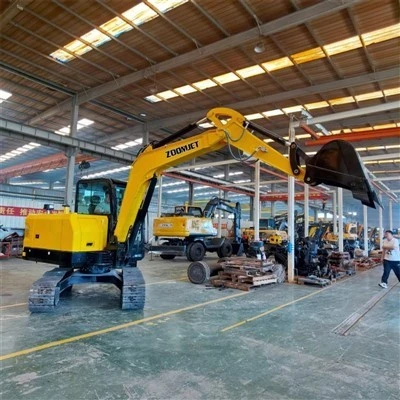
First, the tracks are one of the most easily damaged external components of an excavator. The tracks are in direct contact with the working ground. In harsh working conditions such as muddy depressions, gravel-strewn areas, or hard and rugged terrain, continuous friction, impact, or obstruction by foreign objects can easily lead to problems such as track plate wear, track chain breakage, and track pin corrosion. This directly shortens the service life of the tracks and can even cause the equipment to drift and reduce operational stability.
Therefore, in daily use, it is essential to prioritize assessing the working site conditions and avoid extreme working conditions as much as possible. After operation, promptly clean mud, sand, and gravel from the track gaps, regularly check track tension and component integrity, and replace track components (such as track plates and connecting pins) that are worn beyond limits or deformed and cracked in a timely manner to reduce wear and tear at the source.

Secondly, the hydraulic system is the "power heart" of the excavator and also a high-risk area for failure.This system is responsible for driving core actions such as boom raising and lowering, stick extension and retraction, and bucket operation. Prolonged high-intensity operation can easily lead to increased system oil temperature and hydraulic oil contamination, which in turn can cause hydraulic pump wear, seal aging, and pipeline leaks. In severe cases, abnormal pressure fluctuations can cause irreversible damage to core components such as cylinders and valve assemblies.
To ensure the stable operation of the hydraulic system, it is essential to regularly replace the hydraulic oil and filter elements according to the equipment manual's requirements to prevent impurities from clogging the oil circuits. Before daily operations, check the hydraulic oil level and temperature, and during operation, pay attention to any abnormal noises or leaks in the system. If loose pipe joints or damaged seals are found, the machine must be stopped immediately for repair to prevent the problem from escalating.

WhatsApp:+86 13287287709
In summary, as the "main force" in engineering construction, the reliable operation of excavators is a crucial prerequisite for ensuring construction progress and reducing cost losses.Only by establishing a routine and meticulous maintenance mechanism, and by proactively preventing and promptly repairing vulnerable parts such as tracks and hydraulic systems, can the service life of the equipment be effectively extended, operational efficiency improved, and a solid guarantee provided for the smooth progress of engineering construction.
In summary, as the "main force" in engineering construction, the reliable operation of excavators is a crucial prerequisite for ensuring construction progress and reducing cost losses.Only by establishing a routine and meticulous maintenance mechanism, and by proactively preventing and promptly repairing vulnerable parts such as tracks and hydraulic systems, can the service life of the equipment be effectively extended, operational efficiency improved, and a solid guarantee provided for the smooth progress of engineering construction.


