


With the scaled and standardized development of infrastructure projects, the traditional manual single-machine bending of straight rebars can no longer meet the output and quality requirements of construction works. Manual processing suffers prominent drawbacks including large dimensional deviations, high labor costs and low productivity, hindering the construction progress of precast components, roads and bridges. As intelligent integrated processing machinery, the CNC rebar bending center comes into being. Adopting CNC servo and dual-head linkage technology, it realizes fully automatic bending and forming of thick rebars, and has become the flagship core equipment of modern centralized rebar processing plants.
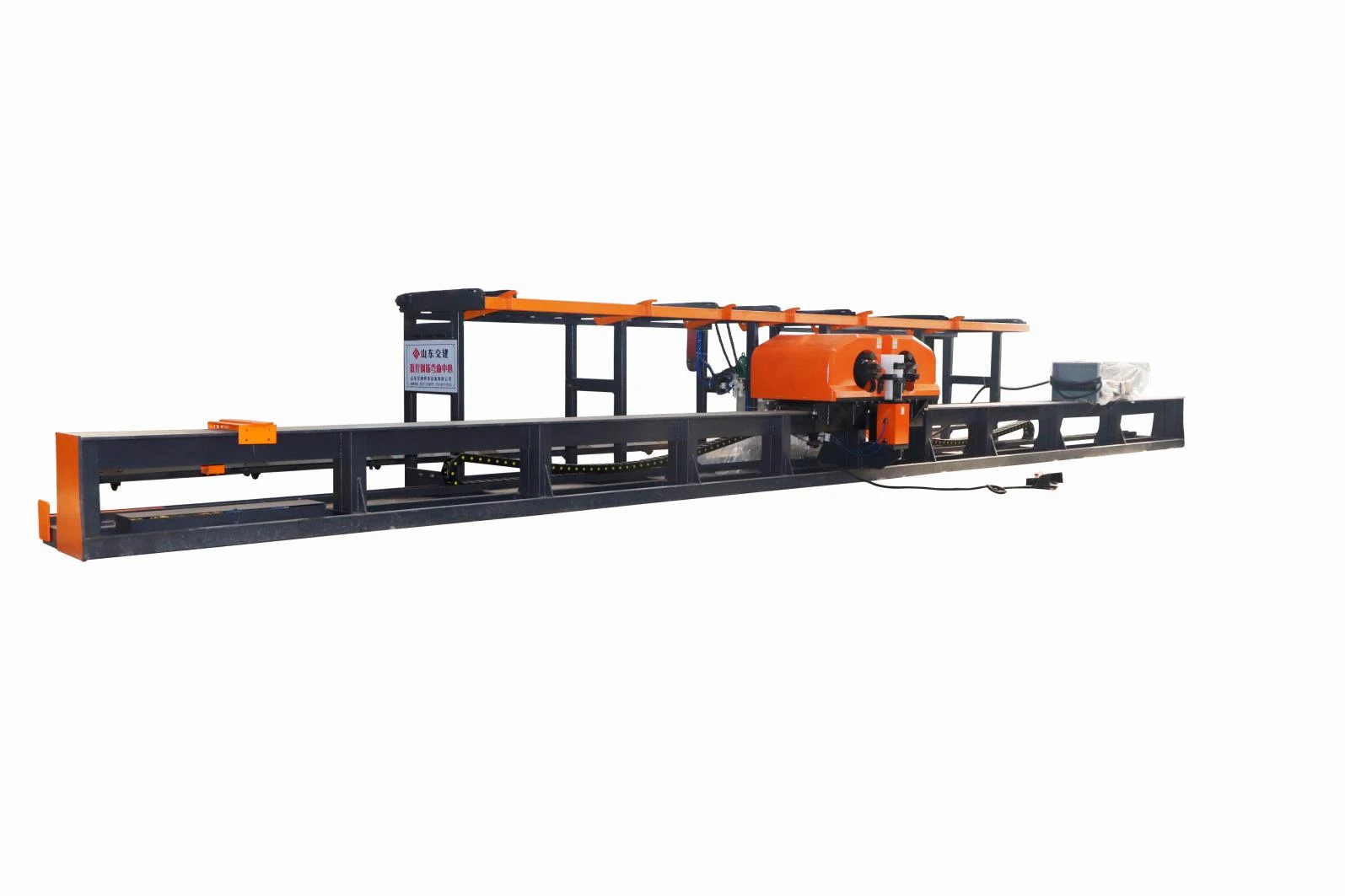
1. Equipment Overview: Transforming the Processing Mode of Heavy Straight Rebars
The CNC rebar bending center is a full-automatic numerical control equipment specially designed for deep processing of straight deformed rebars, mainly performing fixed-length bending of main bars, stirrups and special-shaped steel bars used in bridge and housing construction. Traditional processing relies on manual bending by separate single machines; transporting and positioning long rebars is time-consuming and labor-intensive, while finished products suffer severe dimensional errors. Equipped with a dual-head servo bending system and automatic feeding & positioning platform, the machine realizes fully linked numerical control for feeding, displacement, multi-angle bending and discharging. Featuring a heavy integrated frame and safety protection structure, it processes straight rebars from Φ12 to Φ40, serving as standard core equipment for large rebar processing plants and road & bridge precast yards.
2. Core Performance Advantages: Improving Quality, Boosting Output & Cutting Costs
High-efficiency dual-station production The left and right bending heads can work independently or synchronously to process multiple rebars at one time. Automatic shifting precisely switches bending positions, delivering far higher single-shift output than multiple traditional single machines, greatly shortening the processing cycle to cope with mass rush orders.
Precise, stable and user-friendly CNC operation Fitted with an industrial touch HMI preloaded with hundreds of rebar bending drawing programs. Operators only need to input steel bar specifications, bending angles and dimensions to launch automatic production, with tiny tolerances in length and angle. New staff can operate proficiently after brief training, reducing reliance on experienced senior workers. Multiple emergency stop switches and protective baffles are installed to upgrade operational safety.
Lower long-term operation costs One bending center can replace 4 to 6 bending workers, drastically cutting labor expenditure. Automatic positioning reduces scrap loss caused by rebar collision and dimensional errors. The hydraulic servo system consumes less power, while the thickened frame and wear-resistant bending dies ensure low failure rates and easy daily maintenance.
3. Industrial Application & Engineering Value
The machine fabricates various components such as box girder reinforcement, pile cage bars, beam-column main bars and special-shaped embedded bars for tunnels. It is widely applied in key infrastructure including expressways, railway bridges, precast buildings and urban underground utility tunnels. Nowadays, the construction industry promotes centralized rebar processing plants. The CNC bending center addresses common problems of on-site manual processing: inconsistent product quality and insufficient processing speed lagging construction schedules. Standardized formed steel bars fully comply with seismic codes, and unified processing standards guarantee civil engineering quality from the source.
Conclusion
Against the backdrop of industrial upgrading in infrastructure, the CNC rebar bending center makes up for gaps in intelligent processing of heavy straight rebars with its outstanding strengths of dual-head automation, high precision and large capacity. It eliminates bottlenecks of low efficiency and poor precision in traditional manual bending, accelerating the transformation of the rebar processing industry toward standardization and assembly line production. With continuous domestic and overseas infrastructure projects underway, such intelligent CNC rebar processing equipment will keep supporting construction projects in quality improvement, efficiency promotion and consumption reduction, standing as an indispensable core facility of modern rebar production lines.


