Hey there! As a supplier of backhoe excavators, I've been in the thick of the action, dealing with these powerful machines day in and day out. One of the most crucial aspects of a backhoe excavator is its hydraulic system. So, let's dive into what these hydraulic systems are for in a backhoe excavator.
First off, what the heck is a hydraulic system? Well, it's a system that uses fluid to transmit power. In a backhoe excavator, this fluid is usually hydraulic oil. The basic principle behind it is pretty simple. You've got a pump that pushes the hydraulic oil through a series of valves and hoses to different parts of the machine. This oil then applies pressure to pistons and cylinders, which in turn move the various components of the backhoe.
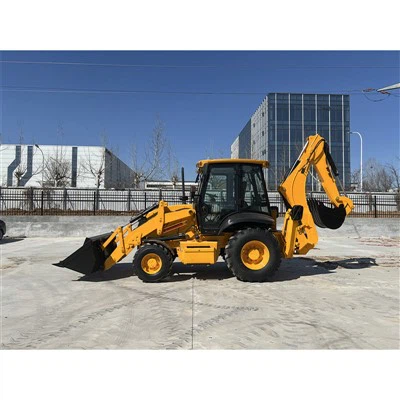
One of the main functions of the hydraulic system in a backhoe excavator is to control the movement of the boom, stick, and bucket. The boom is the long arm that extends from the main body of the excavator. The stick is the part that attaches to the boom and holds the bucket. And the bucket is, well, the thing that scoops up dirt, rocks, and all that other stuff.
The hydraulic system allows the operator to move the boom up and down, left and right. This is super important because it gives the operator a wide range of motion to work with. For example, if you're digging a trench, you can use the hydraulic system to lower the boom and bucket into the ground at just the right angle. Then, you can use it to lift the bucket full of dirt out of the trench and dump it somewhere else.
The stick also relies on the hydraulic system for movement. You can extend or retract the stick, which gives you more reach or allows you to get closer to the work area. This is handy when you're working in tight spaces or need to reach over obstacles.


And of course, the bucket is operated by the hydraulic system too. You can open and close the bucket to pick up and release materials. Whether you're scooping up gravel, loading it into a truck, or digging a foundation, the hydraulic system gives you precise control over the bucket's movements.
Another important function of the hydraulic system is to control the stabilizers. Stabilizers are the legs that extend from the sides of the backhoe excavator to keep it stable during operation. When you're working on uneven ground or doing heavy lifting, the stabilizers are essential for preventing the machine from tipping over.
The hydraulic system allows the operator to extend and retract the stabilizers quickly and easily. You can adjust the height of each stabilizer independently, which helps to level the machine and keep it steady. This is especially important when you're working on slopes or in areas with soft ground.
The hydraulic system also plays a role in the rotation of the backhoe. Most backhoe excavators have a rotating upper structure that allows the operator to turn the boom and bucket in a 360 - degree circle. This gives the operator even more flexibility and makes it easier to work in different directions without having to move the whole machine.
The hydraulic system powers the motor that rotates the upper structure. The operator can control the speed and direction of the rotation, which is really useful when you're working in a confined area or need to quickly change the direction of your work.
Now, let's talk about the different types of backhoe excavators we offer. We have the Standard Backhoe Loader, which is a versatile machine that's great for a wide range of construction and excavation tasks. It's got a powerful hydraulic system that provides smooth and reliable operation.
Then, we have the Agricultural Backhoe Loader. This one is designed specifically for agricultural applications. It's a bit more compact and maneuverable, but it still has a robust hydraulic system that can handle tasks like digging irrigation ditches, moving hay bales, and more.
The hydraulic system in our backhoe excavators is designed to be durable and efficient. We use high - quality components and advanced technology to ensure that the system can withstand the rigors of heavy - duty use. Regular maintenance is also important to keep the hydraulic system in top shape. This includes checking the hydraulic fluid levels, changing the filters, and inspecting the hoses and valves for any signs of wear or damage.
In addition to the basic functions I've mentioned, the hydraulic system can also be used to power other attachments. Some backhoe excavators can be fitted with attachments like breakers, augers, and grapples. These attachments are powered by the hydraulic system, which means you can easily switch between different tools depending on the job at hand.
For example, if you need to break up concrete, you can attach a hydraulic breaker to the backhoe. The hydraulic system will provide the power needed to operate the breaker, allowing you to quickly and efficiently break up the concrete.
If you're in the market for a backhoe excavator, you'll want to pay close attention to the hydraulic system. A good hydraulic system will make your work easier, more efficient, and safer. It will give you the control and power you need to get the job done right.
At our company, we're committed to providing high - quality backhoe excavators with top - notch hydraulic systems. We offer a range of models to suit different needs and budgets. Whether you're a small contractor, a farmer, or a large construction company, we've got a backhoe excavator that's right for you.
If you're interested in learning more about our backhoe excavators or have any questions about the hydraulic systems, don't hesitate to get in touch. We're here to help you make the best choice for your business. Let's start a conversation about your requirements and see how we can help you get the most out of your backhoe excavator.
References:
- "Hydraulic Systems in Construction Equipment" - General industry knowledge
- Manufacturer's manuals for backhoe excavators